















Membrane Bioreactor (MBR) Solutions
Benefits of Membrane Bioreactor Wastewater Treatment
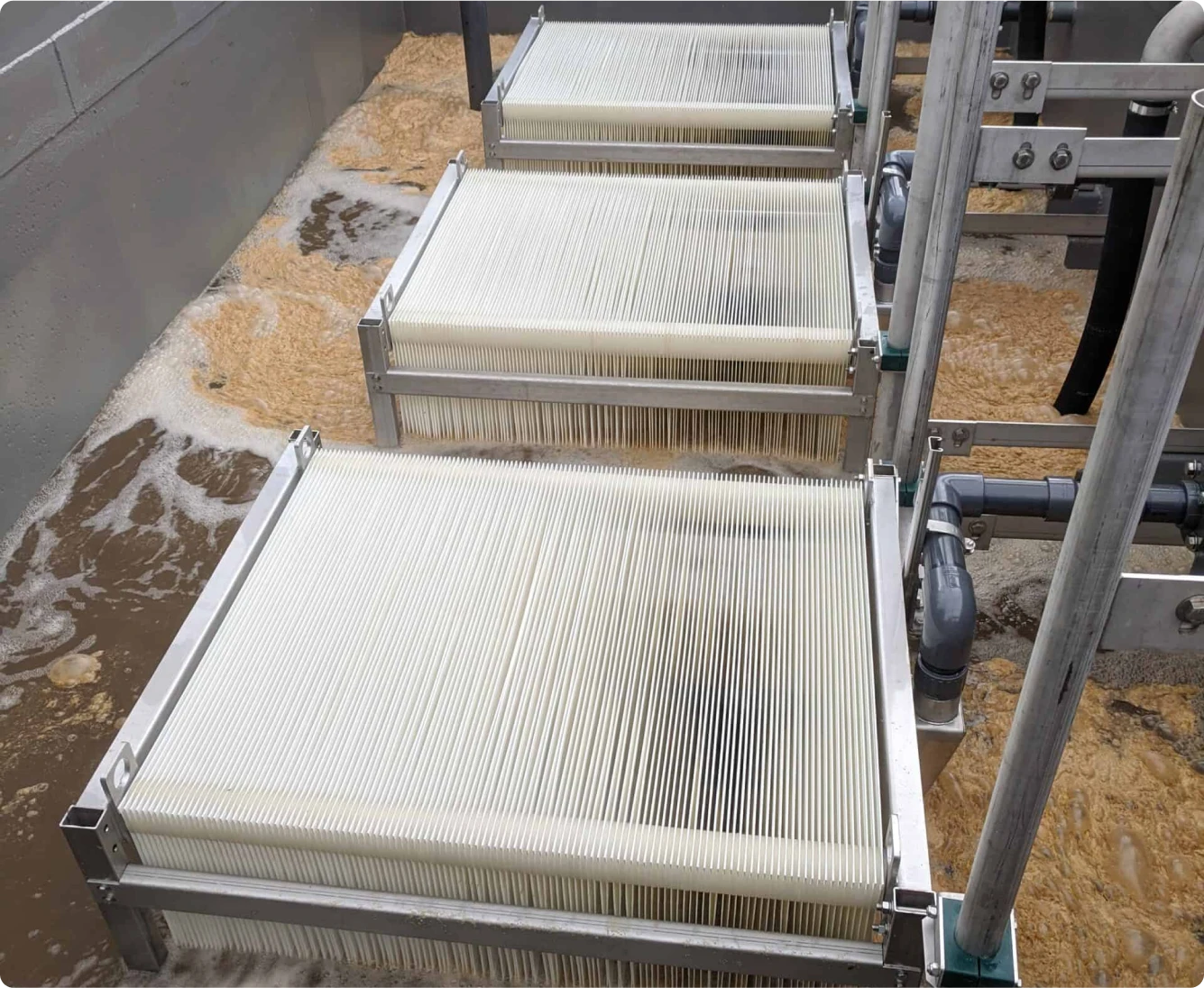
As environmental regulations become increasingly stringent, Membrane Bioreactor Technology enables developers to treat wastewater to meet even the strictest permit regulations. Membrane bioreactors for wastewater treatment offer several benefits, including:
- Treated wastewater effluent can be used in reuse applications.
- Remote facilities can be constructed in decentralized locations.
- Cost-effective for flow rates ranging from 5,000–625,000 GPD per module.
- Mobile units available, allowing for a temporary bypass of the wastewater treatment plant.
How a Membrane Bioreactor System Works

Headworks Screen
Removes coarse solids such as rags, sticks, wood, and other larger materials that clog or disrupt the biological wastewater treatment process.
Equalization Tank
Normalizes the otherwise inconsistent flow rate of a service area, which is essential for efficient biological treatment and effective wastewater management.
Treatment Basin
Has zones for anoxic and anaerobic processing and houses the membrane filtration units. This submerged MBR process optimizes the treatment of organic pollutants and ensures high wastewater quality.
Sludge Processing
A holding tank for biological processes and dumpster for landfill leachate management. This contributes to an effective industrial wastewater treatment system.
Effluent Discharge
Includes chemical contact tanks, reuse storage tanks, and/or discharge pumps for treated wastewater. These components support sustainable wastewater management and reuse practices.
Advanced MBR Solutions for Diverse Wastewater Needs
Membrane Bioreactor (MBR) plants are quickly becoming the go-to for efficient and sustainable wastewater treatment across a wide range of industries, private communities, and municipalities.
Through M|MBR Systems, a Veyra company, we excel in designing and building advanced MBR systems, incorporating major membrane technologies. Our expertise covers:
- Polymeric flat sheet and flat plate membranes
- Polymeric hollow fiber membranes
- Ceramic flat plate membranes
This comprehensive approach allows us to deliver optimal performance and tailored solutions for diverse wastewater treatment needs, from industrial applications to municipal systems, based on the appropriate membrane for the unique application.
How Veyra Delivers MBR
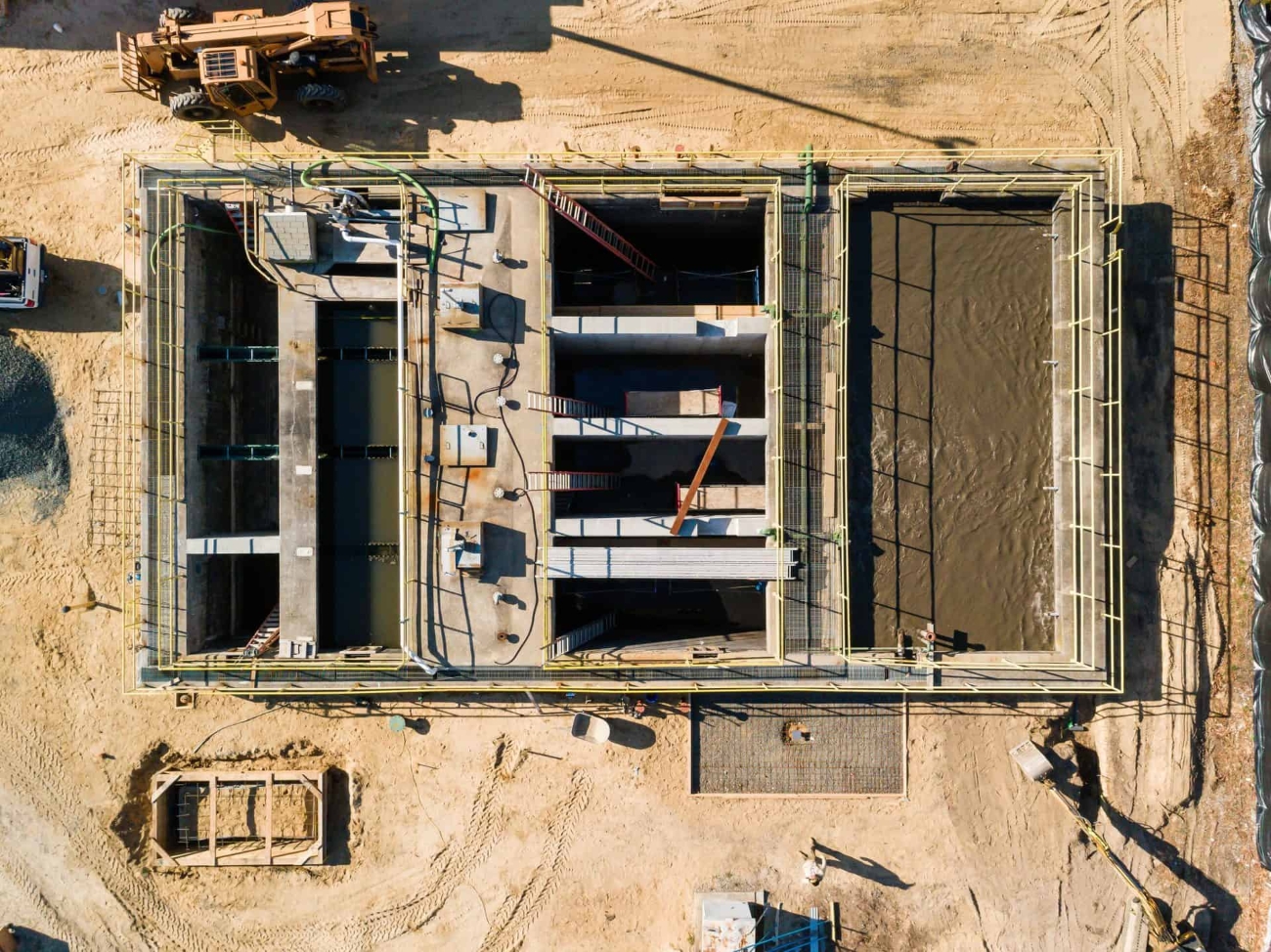
Beyond the membrane, Veyra delivers MBR systems in the following ways:
- Site-built and custom MBR. Designed around existing structures, unusual flows, or capacities outside the modular range.
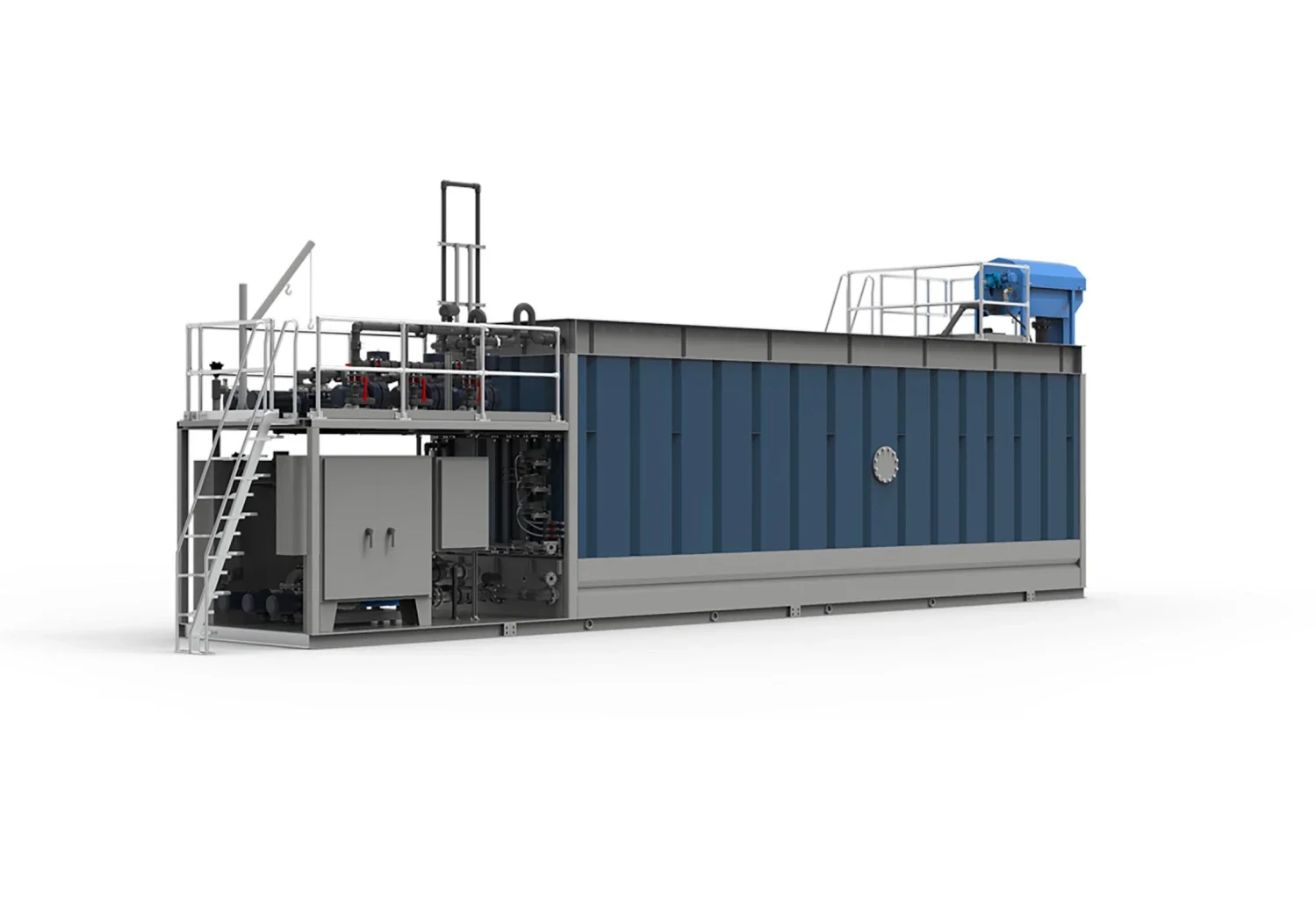
- Packaged modular (BLU|BOX™). Factory-built steel plants from 5,000 to 625,000 GPD, delivered in as few as 6–8 weeks. Available to purchase, rent, or lease-to-own.
- Fixed-site concrete modular (NXT|MBR™). Industrial-grade concrete structure on a modular commissioning schedule, expanding in 250,000 GPD increments.
- Retrofits and upgrades. Converting an existing conventional plant to MBR, or replacing membranes and modules in a plant.
MBR plants are rapidly gaining popularity for efficient and sustainable wastewater treatment in private communities and municipalities alike. Veyra specializes in designing and constructing advanced membrane bioreactor systems, utilizing all major membrane technologies. Our expertise includes polymeric flat sheet and flat plate membranes, polymeric hollow fiber membranes, and ceramic flat plate membranes, enabling tailored solutions and optimal performance for diverse wastewater treatment needs.
Sustainability Through Advanced MBR Solutions

Veyra leverages its extensive experience in designing and constructing MBR wastewater treatment systems to deliver sustainable, customized solutions. We tailor each project based on critical factors like:
- Flow rates and nutrient loading.
- Phasing of future development.
- Local and state regulations.
- Existing site conditions.
- Anticipated treated effluent limits.
- Estimated construction costs.

Selecting the right equipment package is crucial for a project’s schedule, scope, and budget. Veyra, an industry leader, offers comprehensive services. We’ve successfully:
- Completed projects across North America.
- Constructed facilities in both public and private sectors.
- Utilized MBR technologies for a wide range of reuse applications, including those meeting stringent Title 22 reuse effluent standards.
Want to explore the real world application of MBR technology?
Click here to view our latest MBR case studies.
Have inquiries about our MBR solutions?
Click here to Contact Our Experts.
Frequently Asked Questions
MBR technology combines biological treatment with membrane filtration to produce exceptionally high-quality effluent while reducing overall system footprint. Compared to conventional treatment processes, MBR systems can support water reuse applications, meet stringent permit requirements, and provide greater treatment efficiency in space-constrained environments.
MBR systems are often selected when projects require high effluent quality, water reuse capabilities, limited site space, or strict regulatory compliance. They are commonly used for municipal, industrial, private utility, and decentralized wastewater treatment applications where long-term performance and operational flexibility are important considerations.
While project requirements vary, MBR systems can help reduce lifecycle costs by minimizing footprint requirements, supporting phased capacity expansion, producing reuse-quality effluent, and reducing the need for additional downstream treatment processes. When properly designed, these benefits can help offset infrastructure, operational, and future expansion costs over the life of the facility.
MBR vs. Conventional Activated Sludge
See how MBR compares with conventional activated sludge (CAS) across land, capital cost, energy, sludge, chemicals, and labor, adapted from Veyra’s white paper.
| Factor | CAS | MBR |
|---|---|---|
| Land & civil infrastructure | Large footprint — multiple clarifiers, sedimentation basins, tertiary treatment units | Smaller footprint; eliminates secondary clarifiers and tertiary filtration |
| Structural costs | Large concrete tanks for sedimentation and sludge handling | Modular, prefabricated units reduce structural costs |
| Expansion flexibility | High cost to add clarifiers and basins as capacity grows | Modular scalability — phased expansion with minimal infrastructure changes |
| Tertiary treatment | Requires additional filtration and disinfection | Built-in filtration eliminates tertiary treatment costs |
| Capital cost (0.5 MGD) | $5–7 million | $4.5–6 million in many cases, as MBR costs continue to fall |
| Energy use | 0.3–1.2 kWh/m³ | 0.8–1.5 kWh/m³* |
| Sludge production | 30–50% more sludge than MBR; SRT of 5–15 days | Longer SRT of 20–60 days; less sludge per unit treated |
| Chemical costs | High dependency on coagulants, polymers, disinfectant | 20–50% lower chemical cost |
| Labor & maintenance | Continuous operator oversight for clarifier performance, RAS rates, chemical dosing | SCADA-driven automation; fewer manual interventions |
*Recent advancements have reduced MBR energy consumption to less than 0.1 kWh/m³ in some configurations, depending on technology type and design flux.
Source: Adapted from Veyra, The Real Cost of Wastewater Treatment: MBR Reshapes the Equation
Critical Components of MBR Systems
Membrane filtration is a critical part of treating wastewater, and MBR systems take it a step further. They use different types of ultrafiltration (UF) membranes to make sure the treated water is of the highest quality.
Managing membrane fouling is absolutely critical for the smooth operation of MBR systems. While the customer handles the cleaning, Veyra designs systems with advanced techniques to minimize fouling and extend the life of your membrane material, making cleaning efforts more effective and less frequent.
MBR systems frequently use submerged membrane bioreactor configurations and UF membranes to significantly boost the efficiency and effectiveness of the wastewater treatment process.
The integrated biological process in MBR systems, which includes the activated sludge process, effectively breaks down organic matter and suspended solids and significantly reduces nutrient levels in the treated wastewater. This results in high-purity treated water suitable for water reuse.
Nutrient removal is a vital function of MBR systems, achieved through specialized membrane modules. This ensures compliance with environmental standards and the production of high-quality treated wastewater effluent.
MBR systems consistently produce high-quality treated water. This makes it perfect for various water reuse applications, significantly contributing to sustainable water resource management.
Regular chemical cleaning of the membrane elements is essential for maintaining the efficiency of MBR systems and ensuring long-term performance.
MBR systems are also employed for treating landfill leachate and effectively managing biomass to ensure environmentally safe discharge.
Microorganisms play a crucial role in membrane bioreactor systems, directly impacting suspended solids concentration and the overall effectiveness of the wastewater treatment process.