
















Brewery Wastewater Treatment: What’s Going Down the Drain Is Changing
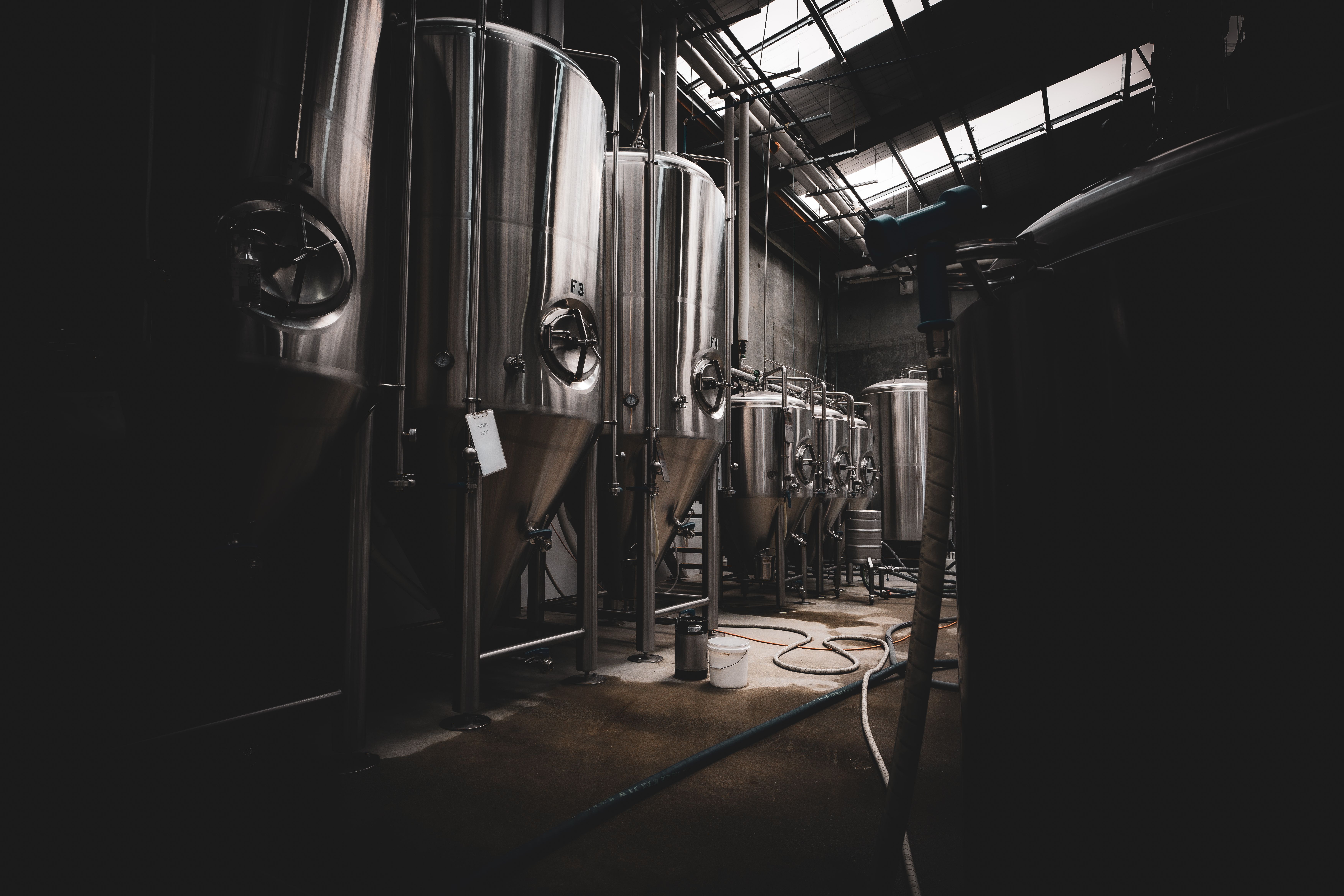
A single 10,000-barrel brewery can send as much organic load to a municipal plant as a thousand homes. That’s the Brewers Association’s own math, and sewer districts have done it too. As craft brewing has spread into small towns built around residential-scale treatment plants, more breweries are being classified as industrial users, sampled more often, and billed for every pound of BOD and suspended solids they discharge.
Now the product mix is shifting as well. Non-alcoholic beer is adding a new stream to brewery wastewater, and it’s one most facilities haven’t planned for.
From managing spent yeast and cleaning chemicals to addressing new waste streams from non-alcoholic beer production, the brewery wastewater treatment process requires understanding what enters the drain and identifying the right combination of source control, pretreatment, and biological treatment.
What Makes Brewery Wastewater Different
Brewery effluent is high-strength, solids-laden, and wildly variable in pH and temperature. Most of what makes it difficult comes straight from the brewing process:
- Spent grain from the mash and lauter tun: high in carbohydrate and protein, and heavy enough to settle in and obstruct sewer lines.
- Trub: the protein-and-hop sludge that coagulates during the boil, high in both BOD and suspended solids.
- Spent yeast from fermenter bottoms: dense, protein-rich, and among the largest single contributors to BOD and TSS. The Brewers Association attributes nearly half of a typical brewery’s BOD and close to 70% of its suspended solids to fermentation.
- Hop material, increasingly significant as dry-hopped styles add vegetal solids to tank bottoms.
- Spent filter media such as diatomaceous earth, along with packaging debris like label pulp, glass, and caps.
- CIP swings: caustic and acid cleaning cycles that can push a brewery’s discharge from one end of the pH scale to the other within a single shift.
Layer production schedules on top of that and the result is a waste stream that changes by the hour. A brew day, a fermenter dump, and a packaging run each send something different to the drain. Benchmarking data published by the Brewers Association shows average BOD around 10,000 mg/L and TSS above 2,000 mg/L for breweries without pretreatment. Typical domestic sewage runs in the low hundreds.
Municipal surcharges are calculated on pounds of pollutant, not concentration, so diluting the discharge doesn’t lower the bill, and many sewer ordinances prohibit adding clean water to dilute it anyway.
How Does Non-Alcoholic Beer Production Affect Brewery Wastewater?
Non-alcoholic beer has moved well past novelty. Circana data reported by Beverage Industry put U.S. NA beer sales at roughly $583 million for the 52 weeks ending Dec. 28, 2025, up about 22% in dollars and nearly 24% in case volume. Large brewers have built out NA portfolios, craft brewers are adding NA lines alongside their flagships, and analysts are still forecasting double-digit growth, even as the category’s growth rate gradually cools from its earlier highs.
For many breweries, that growth means installing dealcoholization equipment for the first time. Whether the method is vacuum stripping, distillation, or membrane separation, removing alcohol from finished beer leaves an ethanol concentrate behind. Equipment suppliers describe that condensate in the range of roughly 18–35% ABV, depending on the strength of the incoming beer. Some breweries find a use for it, blending it into other products or new beverages. Where there’s no use for it, a common practice is to dilute it with process water and send it down the drain.
Equipment suppliers recommend diluting the condensate for safety, keeping its flash point high enough to avoid explosion-hazard zones in the brewery. The sewer has its own rule: federal pretreatment regulations prohibit discharging streams with a closed-cup flash point below 140°F to a municipal plant. Dilution addresses the fire hazard. It doesn’t change how many pounds of ethanol go down the drain.
Ethanol is one of the most oxygen-hungry compounds a brewery can discharge. By basic stoichiometry, every gram of ethanol carries about two grams of chemical oxygen demand (COD). Run that through a barrel of 5% ABV beer and the ethanol removed works out to roughly 20 pounds of COD. For context, the Brewers Association’s example of a 10,000-barrel brewery sends about 10 pounds of BOD to drain per barrel produced. Put plainly: draining the alcohol from a dealcoholized barrel can add an organic load in the same range as everything else that barrel sends to the sewer.
How Can Breweries Reduce BOD and Wastewater Discharge Costs?
One of the most cost-effective steps a brewery can take happens before any treatment system. Side-streaming means capturing spent yeast, trub, weak wort, and off-spec beer at the source before it reaches the drain, and it targets the streams that do the most damage. According to Brewers Association guidance, fermentation and filtration effluent typically make up only about 3% of a brewery’s wastewater volume but can carry as much as 97% of its BOD load. In one case documented by the BA, Short’s Brewing Company cut its effluent BOD from roughly 10,800 mg/L to 3,550 mg/L by progressively side-streaming yeast, trub, weak wort, and cellar waste, with substantial TSS reductions along the way.
The NA ethanol stream is a natural candidate for the same discipline. It is concentrated, it is predictable, and it comes out of a single piece of equipment. Captured, it can be reused, hauled, or routed to an anaerobic process that turns its energy content into biogas. Drained, it becomes a surcharge.
When Source Control Isn’t Enough
For breweries facing tight discharge limits, a small municipal plant, or no sewer at all, on-site treatment becomes the conversation. Brewery wastewater is a strong fit for biological treatment because nearly all of its load is biodegradable. The design question is how to handle its strength, its solids, and its swings.
A common approach for high-strength industrial streams pairs anaerobic pretreatment, which removes the bulk of the organic load and can recover biogas in the process, with aerobic polishing. Where effluent quality matters most, a membrane bioreactor (MBR) replaces the conventional settling clarifier with a physical membrane barrier. That barrier holds back suspended solids regardless of how well the biology is settling on a given day, which is a real advantage for a waste stream as variable as a brewery’s. MBR effluent can be clean enough to reuse inside the facility for applications like cooling tower makeup, boiler feed, and non-product wash-down.
Choosing the Right Brewery Wastewater Treatment System
No two breweries send the same thing to the drain. A brewpub dumping a few barrels of trub a week has a different problem than a regional producer running a dealcoholization line around the clock. The right answer starts with understanding your streams: a water balance, a drain inventory, and sampling at the points that matter. Treatment comes after that.
Veyra works with food and beverage producers to match treatment to the waste stream rather than the other way around: customized solutions built from standardized parts, from anaerobic pretreatment through jet aeration and MBR polishing.
Veyra’s experience with breweries demonstrates how wastewater treatment solutions can support operational efficiency and long-term sustainability. Projects like Bear Republic Brewing and Russian River Brewing Company highlight the importance of addressing brewery-specific wastewater challenges, from improving treatment infrastructure to supporting more sustainable operations.
If NA production is on your roadmap, or already in your cellar, the time to plan for that ethanol stream is before it reaches the drain.
Whether you’re expanding production or managing existing wastewater challenges, the right treatment strategy starts with understanding what’s going down the drain—and planning for what comes next.