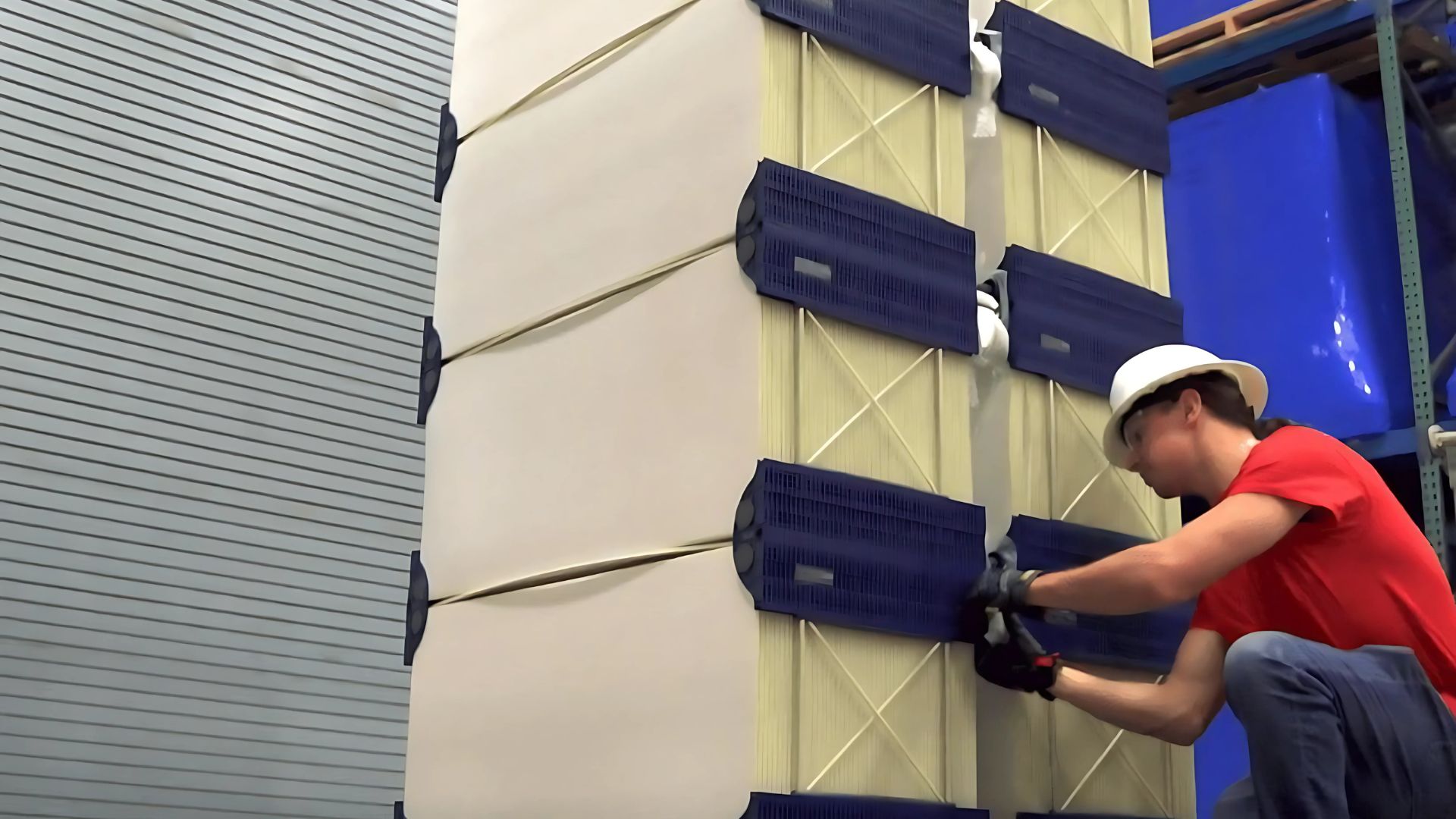
















The Hidden Cost of Land: Why MBR Wins the Space-Saving Battle in Wastewater Treatment

While wastewater treatment discussions often prioritize treatment efficiency, energy costs and sometimes effluent quality for compliance the significant financial impact of land costs is frequently overlooked.
Whether expanding an existing facility or constructing a new one, land availability—and its associated price tag—can significantly impact project feasibility.
In dense urban environments, securing space for a wastewater treatment plant is both challenging and costly. Even in rural settings, sprawling traditional wastewater treatment systems bring additional financial burdens, including excavation costs, extended piping networks, and regulatory buffer zones that reduce usable land.
With ever-tightening wastewater treatment standards, the challenge becomes: How do you fit advanced wastewater treatment into a smaller footprint without sacrificing performance?
Enter Membrane Bioreactor (MBR) technology.
Let’s take a close look at how MBR wastewater treatment competes with conventional wastewater treatment systems on this simple premise: Land costs money.
Why Traditional Wastewater Plants Take Up So Much Space
Conventional wastewater treatment systems—including Activated Sludge Process (ASP), Trickling Filters, Ditches, Rotating Biological Contactors (RBCs), and Sequencing Batch Reactors (SBRs)—require extensive land due to their reliance on multiple large tanks and settling basins.
A typical layout includes:
- Primary Treatment: Large settling tanks to remove organic matter and grit.
- Secondary Treatment: Aeration tanks that require significant surface area.
- Tertiary Treatment: Additional filtration and disinfection to meet modern effluent standards.
Conventional treatment plants may require 2–5 acres per million gallons per day (MGD) treated. And that land isn’t just housing sewage treatment plant tanks; large sedimentation basins, extensive piping, and significant civil engineering investments drive up costs.
Furthermore, zoning laws mandate buffer zones around wastewater treatment plants, further increasing land requirements.
For municipalities and industries with limited space, these constraints create a major obstacle to expanding or upgrading wastewater treatment infrastructure.
MBR: Doing More With Less
MBR technology revolutionizes wastewater treatment systems by integrating biological treatment with membrane filtration, eliminating the need for secondary clarifiers and significantly reducing tertiary treatment infrastructure.
The result? A wastewater treatment plant that requires perhaps 50-75% less land than traditional wastewater treatment systems.
How MBR Shrinks the Footprint
- No secondary clarifiers: MBR uses membrane technology for solid-liquid separation, eliminating the need for massive clarifiers.
- Higher biomass concentration: MBR supports greater Mixed Liquor Suspended Solids (MLSS) levels, reducing aeration tank size.
- Superior effluent quality: The membrane filtration process removes fine particles, reducing reliance on additional tertiary treatment units.
Saving More Than Just Land: The Infrastructure Advantage
MBR wastewater treatment benefits extend beyond footprint reduction. A smaller sewage treatment plant footprint directly translates into, for one, lower excavation costs; reduced site preparation and less soil displacement means less capital expended up front.
Similarly, compact designs require shorter piping runs and less concrete. Perhaps you’re noticing a theme here in your early-stage CAPEX tables.
And if you’re planning a retrofit (because, again, land acquisition comes at a premium), MBR enables capacity expansion within existing sites without additional literal ground expansion.
For facilities looking to increase treatment capacity without expanding their property, MBR presents the most space-efficient solution available.
Operational Advantages of a Compact Wastewater System
A smaller, more efficient wastewater treatment system provides long-term operational benefits:
- Lower maintenance costs: Fewer tanks mean less infrastructure to manage and maintain.
- Enhanced automation and process control: MBR wastewater treatment integrates seamlessly with SCADA and remote monitoring, improving reliability and reducing labor needs.
- Decentralized treatment potential: MBR’s compact footprint makes it ideal for industrial wastewater treatment and decentralized municipal wastewater systems.
- Reduced membrane fouling: Advanced chemical cleaning methods extend membrane lifespan.
Future-Proofing Wastewater Treatment with MBR
As land costs continue to rise and environmental regulations tighten, treatment plants need scalable, future-ready solutions. This is only becoming more important for operators in the wastewater business.
MBR can win on land acquisition costs because it is designed for a few important and long-range concepts.
Take phased expansion as an example. The modular design of MBRs allows capacity increases without extensive new infrastructure.
Or look at regulatory trends. MBR meets and exceeds the most stringent discharge regulations. Space-constrained industries—including food processing, pharmaceuticals, and microelectronics—are increasingly turning to MBR for on-site treatment and water reuse.
Is MBR the Right Fit for Your Facility?
If your facility faces land constraints, escalating real estate costs, or capacity expansion challenges, MBR presents a cost-effective, space-efficient alternative.
By significantly reducing its physical footprint, MBR cuts infrastructure costs, and ensures long-term scalability. This space-saving advantage creates makes it ideal where land is scarce, and a smart, adaptable choice for any legislative body overseeing municipal wastewater treatment expenses or development board managing projects for high-density residential housing.
Next Steps
Considering an upgrade to your treatment facility? Conducting a cost-benefit analysis that factors in land savings, operational efficiency, and regulatory compliance is critical.
For municipal wastewater, industrial wastewater, commercial, and residential wastewater treatment plant operators and managers, aiming to maximize treatment efficiency, reduce costs, and future-proof their infrastructure, MBR wastewater treatment is the clear choice.
Check back on March 4 as we discuss conventional vs. MBR energy tradeoffs. Does higher membrane aeration outweigh sludge reduction benefits?