














Selecting the Right Membrane Configuration for Your MBR Application
In wastewater treatment, membrane bioreactor (MBR) systems efficiently separate solids from water. Not all MBR systems are created alike, however.
Within the wastewater treatment structure itself, the choice of membrane configuration—Flat Sheet, Hollow Fiber, or Multitube/Multichannel (MT/MC)—is fundamental to its performance.
Each configuration offers unique advantages for different scales of operation and types of wastewater. Consider your wastewater treatment goals, and follow along with this article to learn more about how to work with your partner on an ideal MBR solution.
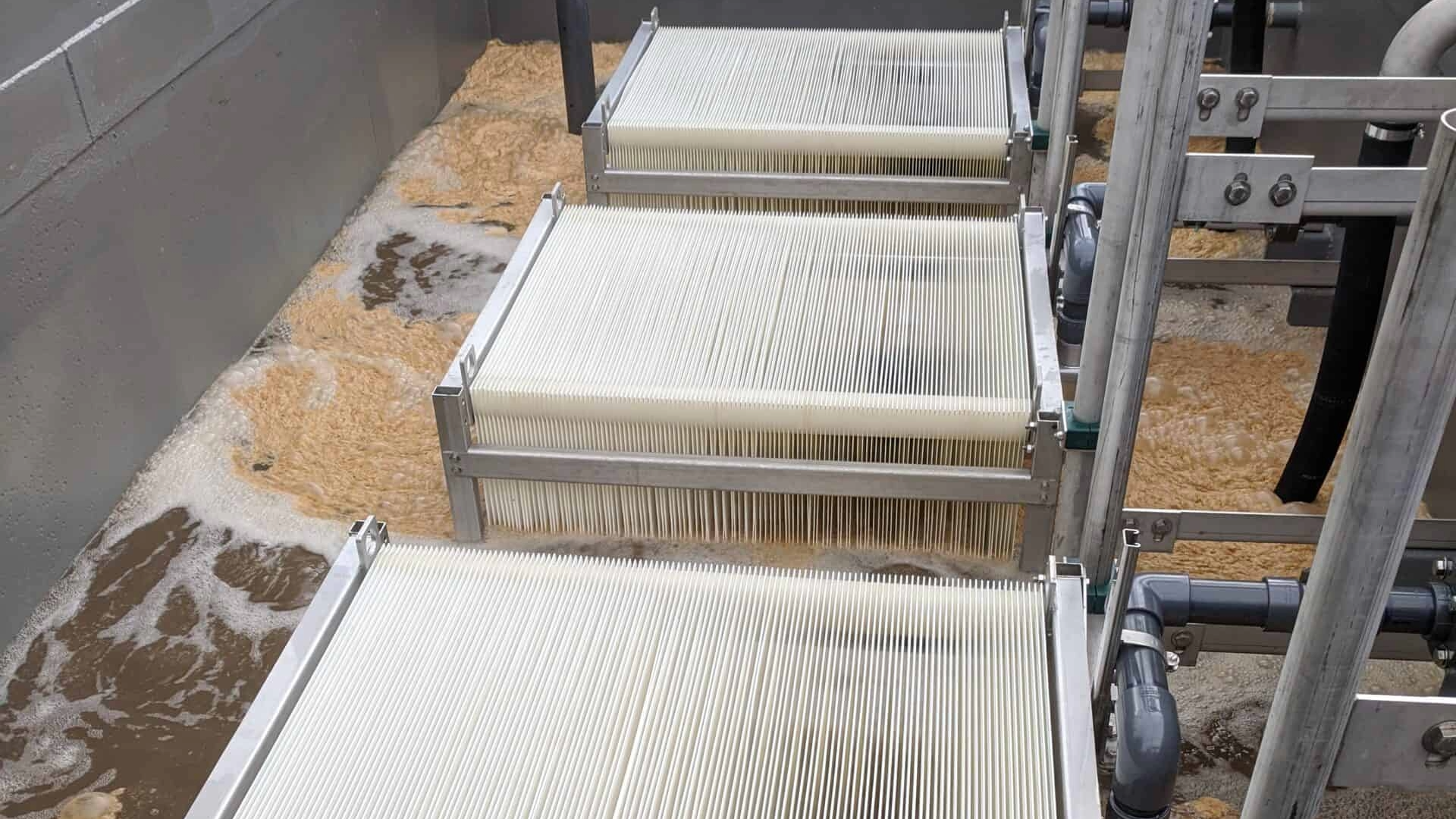
Flat Sheet membranes are characterized much as they sound: by a two-dimensional, planar configuration which simplifies cleaning and maintenance. These membranes are ideal for small- to medium-sized applications (imagine a brewery). They are often used in scenarios where space is limited and ease of access for maintenance is required.
Hollow Fiber membranes, consisting of thousands of tiny, porous fibers, offer a high surface area for filtration in a compact space, leading to significant energy savings. This makes them suitable for large-scale municipal and industrial wastewater treatment.
Multitube/Multichannel membrane configurations provide a robust and flexible solution that caters to variable industrial effluent qualities and volumes, something on the order of a dairy processing plant.
Let’s dig into some of the more technical details for each membrane configuration.
Flat Sheet Membranes
Flat Sheet (FS) membranes are characterized by layered, flat panels, which allow for simple cleaning processes and maintenance. Their compact design makes them ideal for installations with limited space, including those businesses who may need a modular or phased wastewater treatment solution.
An FS system is suitable for smaller wastewater treatment facilities, such as those in residential complexes, small industries, or remote locations.
From a technical standpoint, FS membranes are often chosen for their prevention against fouling, a common challenge in wastewater treatment. Their surface can be easily cleaned, typically through backwashing or chemical cleaning processes, ensuring sustained performance over time.
Engineers must consider the membrane’s pore size, typically ranging from 0.03 to 0.4 µm, which dictates its efficacy in removing particulates and microorganisms.
Hollow Fiber Membranes
Hollow fiber (HF) membranes feature thousands of tiny, straw-like fibers that provide a high surface area for filtration within a compact volume. The density of this design results in lower energy consumption and higher efficiency, making HF systems ideal for large-scale applications like wastewater treatment for municipalities or industrial manufacturing plants.
The key is in HF membranes’ overall efficiency and scalability, which make them a cost-effective solution for handling high volumes of wastewater. The added efficiency benefit is that lower energy usage ultimately reduces the plant’s carbon footprint. (Depending on your business, this may play a role in broader ESG goal-setting).
Technical considerations include the membrane’s resistance to fouling and its operational flux rates, which influence treatment capacity and energy consumption. HF membranes are preferred in scenarios where energy efficiency is paramount, as their design minimizes the energy required for aeration and pumping. Engineers must assess the compatibility of HF membranes with the wastewater’s chemical composition to ensure longevity and performance stability.
Multitube/Multichannel Membranes
Multitube or Multichannel (MT/MC) membranes offer a robust solution, with multiple tubes or channels providing resilience against blockages and fouling. This design ensures consistent operation, even in challenging conditions, making MT/MC systems adaptable to a wide range of effluent types.
MT/MC configurations are particularly effective for small- to medium-sized industrial operations, where the wastewater characteristics may vary significantly. The robustness and operational flexibility of MT/MC systems allow them to handle fluctuations in effluent quality and volume efficiently.
Technical evaluation for MT/MC systems includes examining the ease of cleaning and maintenance, as their structure can be more complex than FS or HF systems.
Selecting the Right Configuration
When considering an MBR system, you will need to evaluate the wastewater volume and the physical space available. Get a sense of your own needs and work backward from there.
Does your team have any energy efficiency goals on the table? Include that in your decision-making, too.
Lastly, understand your specific effluent quality requirements on the back end. Stay up-to-date on state and local regulatory language.
This data-gathering process should include parameters like daily flow rates, peak load conditions, physical dimensions of the installation site, energy consumption targets, and specific pollutant removal goals. As you develop a clear picture of your needs, this information will help guide your decision. (And, in the case of an FS membrane, this information will reveal the actual pore size you might need.)
As an engineering professional, prioritize the long-term operational costs, maintenance requirements, and the adaptability of the system to future needs. Consult with MBR design partners and review case studies to understand the real-world performance of different MBR configurations in scenarios similar to your project.
Want to learn more? Read some of our recent articles:
- How Can MBR Technology Improve Your Wastewater Treatment Operation?
- CHECKLIST: How to Conduct an ESG Audit on Your Wastewater Treatment Capabilities
- Harnessing Wastewater Reuse and Recycling: Driving ESG Progress in the Food and Beverage Industry
- Navigating Evolving Wastewater Regulations in the Food and Beverage Industry
- Advanced Wastewater Treatment Technologies in the Food & Beverage Industry
Want to learn more? Read some of our similar articles:
Sign up for the Veyra newsletter.
We share important perspectives and news on MBR wastewater treatment every two weeks.